Simistiras et al from the Dimas lab have shown that genetic variants can regulate plasma protein levels differently depending on the diet consumed, highlighting the importance of considering both genes and environment in precision prevention strategies.
How genetics and diet interact to shape our biology and influence our health
The effect of diet on genetic regulation in humans remains largely unexplored. A new study by Simistiras et al from the Dimas group, published in Nature Communications, provides evidence that dietary changes can modify how genetic variation influences proteins and biological processes in the human body.
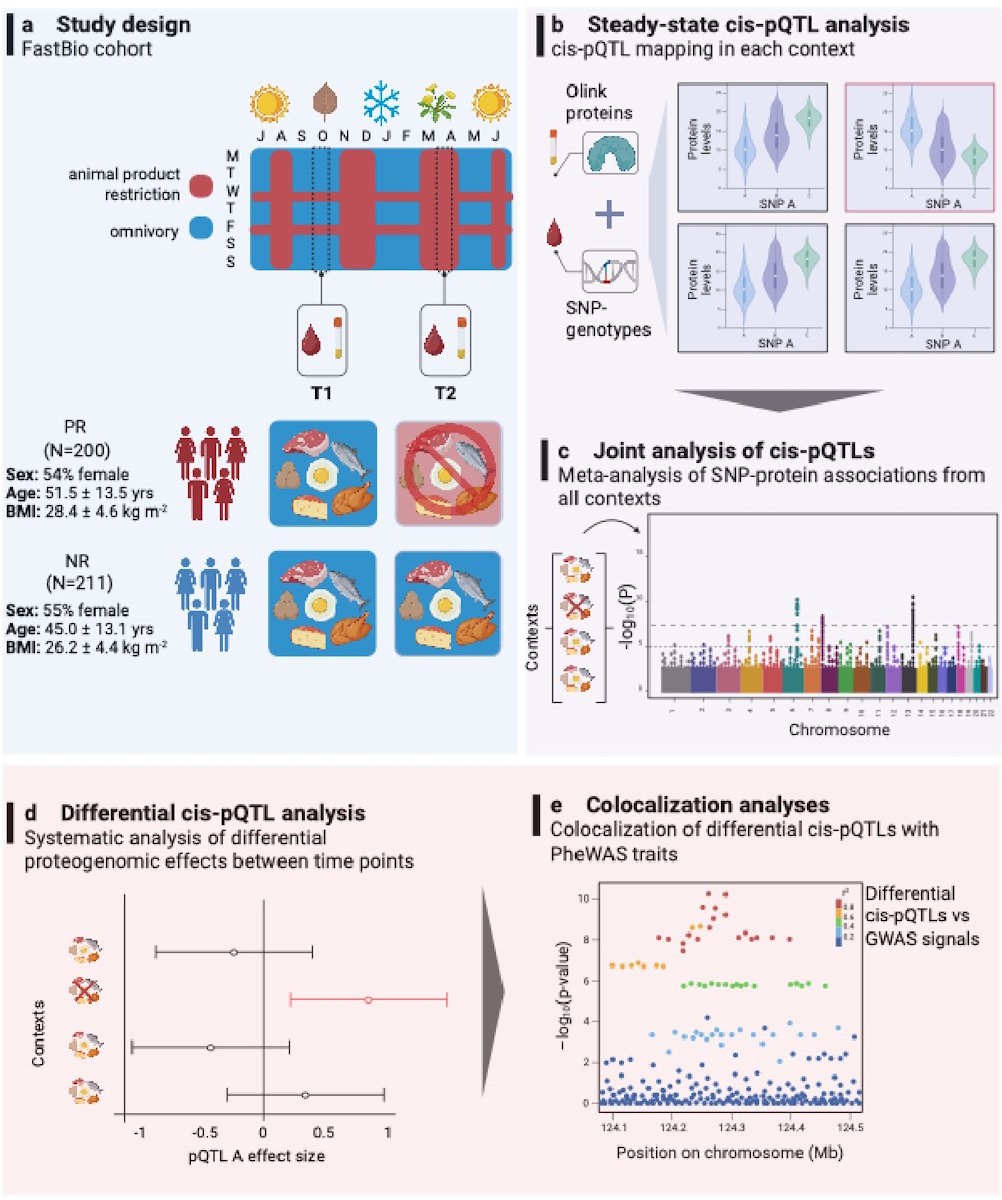
The researchers investigated this question in a unique group of 200 healthy individuals who, for religious reasons, regularly alternate between an omnivorous diet and periods of restriction of animal products, including meat, fish, dairy and eggs. By combining longitudinal proteomic and genetic data, the study identified genetic variants whose effects on circulating protein levels changed depending on dietary state.
Among the most notable findings were diet-dependent genetic effects on LBR and MSRA, proteins involved in cholesterol and methionine metabolism, respectively. A genetic variant associated with LBR protein levels, rs74148404, showed a relationship with obesity exclusively during periods of animal-product restriction, suggesting that dietary context can modify the relationship between genetic variation and disease-related traits.
The study also identified a diet-dependent genetic effect on FGF21, an important regulator of metabolism. This genetic effect was linked to traits related to eosinophil and platelet levels, pointing to interactions between diet, metabolism and immune function.
To distinguish effects related to dietary restriction from broader seasonal changes, the researchers also studied 211 individuals who maintained an omnivorous diet throughout the year. In this group, they identified seasonal changes in the genetic regulation of proteins involved in immune-system pathways, including MAVS, CASP3, PDLIM7 and IL12RB1. These effects were not observed in the same way among individuals restricting animal products, suggesting that dietary patterns may influence or mask seasonal changes in genetic regulation.
Together, the findings reveal that genetic regulation is dynamic and can be influenced by environmental factors such as diet and season. They highlight the importance of considering environmental context when studying the genetic basis of health and disease and provide new insights into why individuals may respond differently to the same dietary change. The findings may ultimately contribute to more precise approaches to disease prevention.
Simistiras, A., Bocher, O., Emmanouil, C. et al. Diet-responsive proteogenomic effects following short-term restriction of animal products in humans. Nat Commun 17, 9558 (2026).
https://doi.org/10.1038/s41467-026-76379-6