New tools to investigate pulmonary fibrosis and target LPA signalling
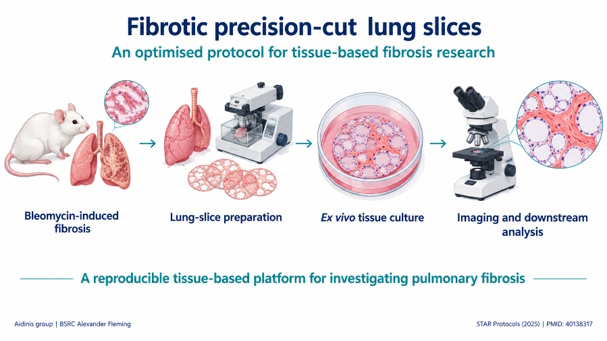
An optimised protocol for generating fibrotic murine precision-cut lung slices
Precision-cut lung slices provide an experimental bridge between conventional cell cultures and whole-animal studies, enabling researchers to investigate disease processes in a tissue-based setting. In this publication, we present an optimised protocol for generating fibrotic mouse precision-cut lung slices, covering bleomycin-induced pulmonary fibrosis, tissue-slice preparation, visualisation and downstream analysis. By providing an alternative to human lung tissue, whose availability can be limited, this approach supports greater experimental homogeneity and reproducibility. The protocol offers a practical resource for investigating pulmonary fibrosis and evaluating tissue-level responses to experimental interventions [PubMed]
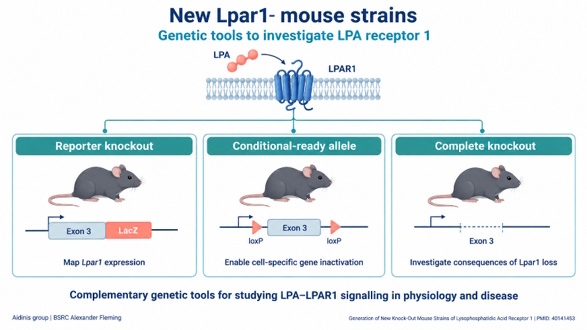
Generation of new knock-out mouse strains of lysophosphatidic acid receptor 1
Lysophosphatidic acid receptor 1 (LPAR1) mediates many of the biological effects of LPA and is a promising therapeutic target in pulmonary fibrosis. To facilitate investigation of its functions, we generated a versatile collection of genetically modified Lpar1 mouse strains. These include a reporter knockout strain, in which LacZ replaces exon 3 to enable the study of Lpar1 expression; a conditional-ready, “floxed” strain that allows cell-specific gene inactivation; and a complete knockout strain lacking exon 3. Together, these complementary genetic tools enable researchers to map Lpar1 expression, distinguish its functions in different cell populations and investigate how LPA–LPAR1 signalling contributes to normal physiology and disease [PubMed].
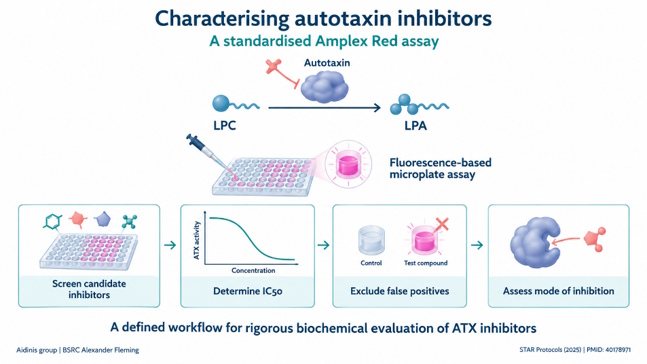
A standardised Amplex Red assay for characterising Autotaxin inhibitors
Autotaxin (ATX) is a secreted enzyme responsible for the extracellular production of LPA, making it an important target for therapeutic investigation in pulmonary fibrosis and other diseases. In this publication, we describe a standardised, fluorescence-based microplate assay for detecting and characterising ATX inhibitors. The protocol guides researchers through initial compound screening, determination of half-maximal inhibitory concentrations (IC₅₀), identification of false-positive results and assessment of the mode of inhibition. By combining these steps within a defined experimental workflow, the assay supports rigorous comparison of candidate inhibitors and helps connect biochemical screening with the development of therapeutic strategies targeting the ATX–LPA signalling axis [Pubmed].