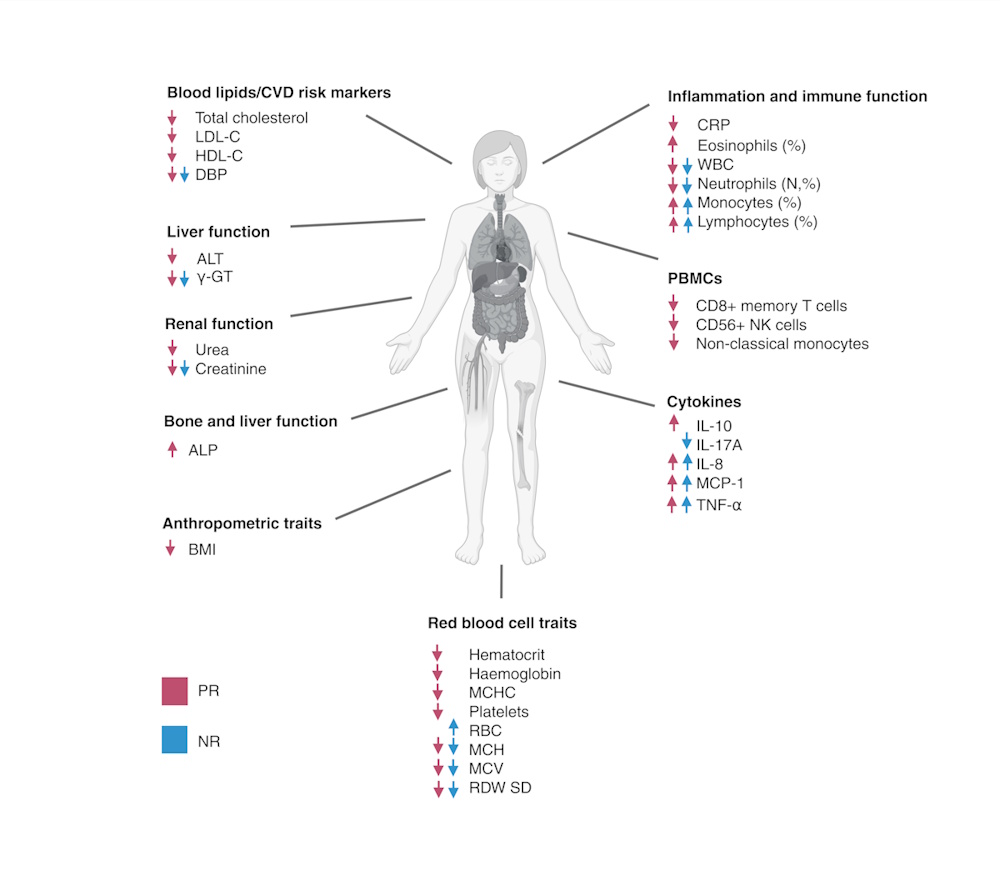
A new study by the Dimas lab has shown that short-term dietary restriction of animal products alters metabolic profiles and modulates immune function, with changes in a direction suggesting mostly positive effects on health.
Diet is a key regulator of metabolic and immune function, yet the biological mechanisms underlying its health effects remain incompletely understood. In a study of healthy individuals who periodically restrict animal products for religious reasons, Loizidou, Palaiokrassa et al examined how short-term dietary change influences systemic physiology in the absence of disease. Animal product restriction was associated with improvements in lipid profiles, markers of renal and hepatic function, and a pronounced reduction in low-grade inflammation. Immune profiling revealed shifts toward a more regulated immune state, including reduced frequencies of pro-inflammatory immune cell subsets and enhanced anti-inflammatory cytokine responses. While most effects were consistent with improved metabolic and immune health, increased alkaline phosphatase levels indicate that some pathways may be adversely affected. Together, these findings demonstrate that even short-term dietary interventions can induce rapid and measurable changes in biological processes relevant to chronic disease risk.
Reference:
Eleni M. Loizidou, Aikaterini Palaiokrassa, Samuel Opoku Asiedu, Alexandros Simistiras, Petros Barmpounakis, Stavros Glentis, Maria Anezaki, Kristina V. Bergersen, Iosif Chatzimichalis, Eleni Kotsanopoulou, Ioannis Kontoyiannis, Nikolaos Demiris, Pavlos Rouskas, Nikolaos Scarmeas, Mary Yannakoulia, Mihalis Verykokakis, Meera G. Nair, Konstantinos Rouskas & Antigone S. Dimas. Short-term animal product dietary restriction alters metabolic profiles and modulates immune function. Commun Med (Lond). 2025 Dec 3. doi: 10.1038/s43856-025-01274-y
https://www.nature.com/articles/s43856-025-01274-y